If you’ve ever stood in front of the mirror wishing your hair would just grow already, you’re not alone. Learning how to grow hair faster is one of the most searched hair care questions in the world — and for good reason. Whether you’re recovering from a bad haircut, trying to reach a new length milestone, or simply want thicker, healthier hair, the journey can feel slow and discouraging when you’re not seeing progress.
Here’s the truth: you cannot change your genetic hair growth rate, which averages around half an inch per month for most women. But what you absolutely can do is create the ideal conditions for your hair to grow at its full potential — consistently, without breakage, and with noticeably better thickness and shine. Knowing how to grow hair faster is less about magic products and more about a combination of smart nutrition, proper scalp care, protective habits, and a few evidence-backed treatments that genuinely make a difference.
This guide covers 15 of the most effective and practical methods for faster hair growth in 2026 — everything from what to eat and how to care for your scalp, to the lifestyle changes that most women overlook completely. Let’s get into it.
Understanding How Hair Actually Grows
Before diving into the tips, a quick understanding of the hair growth cycle helps you set realistic expectations and make smarter decisions about your routine.
Hair grows in four distinct phases. The anagen phase is the active growth period, lasting anywhere from two to seven years depending on your genetics — this is the phase you want to extend and support. The catagen phase is a brief two-week transition where growth slows and stops. The telogen phase is a resting period lasting around three months where the hair stays in place before eventually shedding. The exogen phase is when the hair falls out and the follicle prepares to begin the cycle again.
At any given time, roughly 85 to 90 percent of your hair is in the anagen (growth) phase. Everything you do to support your body — through nutrition, scalp health, stress management, and protective care — directly influences how well your follicles perform during this critical growing period. That’s where all 15 of the following tips come in.
1. Prioritize Protein in Your Diet
Hair is made almost entirely of a protein called keratin. If your diet is consistently low in protein, your body will deprioritize hair growth in favor of more essential biological functions — and your hair will be the first to show it through thinning, dullness, and increased shedding.
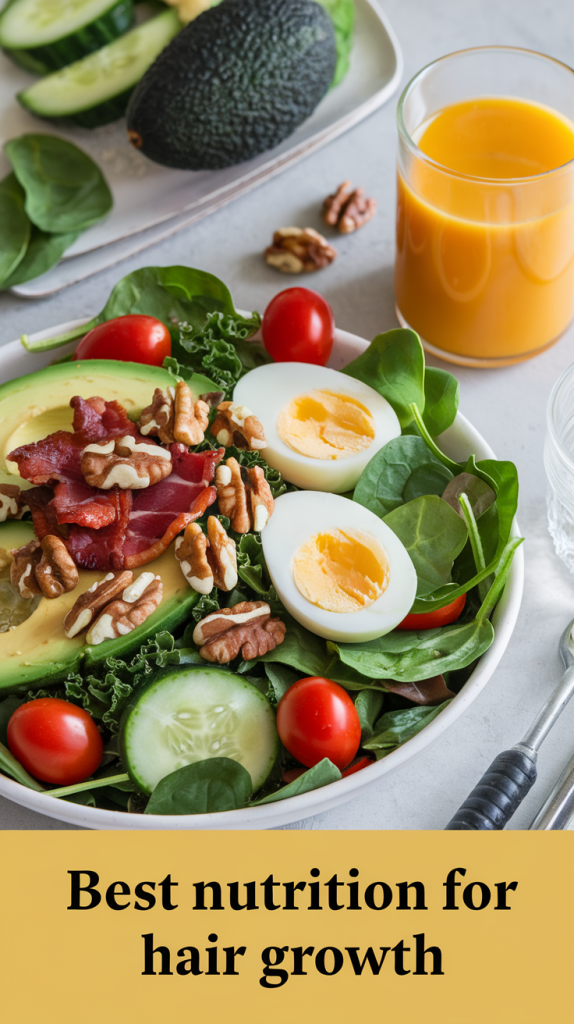
If you want to know how to grow hair faster through nutrition, increasing your daily protein intake is the single most impactful dietary change you can make. Aim for at least 50 to 70 grams of protein per day from high-quality sources. Eggs are particularly valuable because they contain both protein and biotin — two of the most hair-essential nutrients available. Chicken, lentils, Greek yogurt, and fish are excellent additions to a hair-growth-focused diet.
What to eat: Eggs, chicken breast, salmon, lentils, Greek yogurt, quinoa, cottage cheese
Pro tip: If you find it difficult to hit your protein target through food alone, a clean whey or plant-based protein supplement added to a morning smoothie is a convenient and effective solution.
2. Add Omega-3 Fatty Acids to Your Routine
The most hair-beneficial omega-3 sources are fatty fish like salmon, sardines, and mackerel. For plant-based alternatives, chia seeds, flaxseeds, and walnuts are excellent choices. If dietary sources are difficult to incorporate consistently, a high-quality fish oil or algae-based omega-3 supplement (look for EPA and DHA content on the label) is worth adding to your daily routine.
What to eat: Salmon, sardines, mackerel, chia seeds, flaxseeds, walnuts, hemp seeds
Pro tip: A consistent intake of omega-3s over eight to twelve weeks produces visible improvements in hair texture, shine, and reduced breakage — results that no topical product can match because they’re coming from inside the body.
3. Master the Scalp Massage
If there’s one habit that’s genuinely underrated in the conversation about how to grow hair faster, it’s the daily scalp massage. Research has found that consistent scalp massage over a 24-week period produced measurable increases in hair thickness — the mechanical stimulation appears to activate the hair follicles and improve blood circulation to the scalp, delivering more oxygen and nutrients directly to the roots.
You don’t need a special tool or product to do this effectively. Use the pads of your fingertips (never your nails) and apply firm but gentle circular pressure across your entire scalp for four to five minutes daily. You can do this on dry hair, on damp hair before shampooing, or with a hair oil during your wash routine.
How to do it: Start at the hairline, work back toward the crown, then down toward the nape of the neck. Use small, firm circles rather than scratching or rubbing motions.
Pro tip: Adding a few drops of rosemary essential oil to a carrier oil like jojoba or coconut oil before your scalp massage enhances the circulation-stimulating effect. Rosemary oil has shown promise in studies for supporting hair density — dilute it to about 2 to 3 percent (roughly 6 drops per tablespoon of carrier oil) before applying directly to the scalp.
4. Switch to a Sulfate-Free Shampoo
How often you wash your hair matters more than most women realize. Washing daily — or even every other day — strips the scalp of its natural sebum before it has the chance to travel down the hair shaft and provide moisture and protection. The result is a dry, irritated scalp and hair that’s more brittle and prone to breakage than it needs to be.
For most hair types, washing two to three times per week is the sweet spot. This frequency keeps the scalp clean without over-stripping it. Fine or oily hair types may need slightly more frequent washing, while thick, dry, or curly hair types often do best with once-a-week washing supplemented by co-washing (conditioner-only washing) on additional days.
Washing frequency guide:
Fine or oily hair: 3 times per week
Normal hair: 2 to 3 times per week
Thick, dry, or curly hair: 1 to 2 times per week
Pro tip: On non-wash days, use a lightweight dry shampoo at the roots only to absorb excess oil without disrupting the scalp’s natural environment further down the hair shaft.
6. Use a Deep Conditioning Treatment Weekly
Length retention — keeping the hair you grow rather than losing it to breakage — is just as important as the rate of growth itself. A deep conditioning treatment applied once a week replenishes the moisture and protein that daily styling, environmental exposure, and washing deplete from the hair shaft.
Eight hours of your hair rubbing against a cotton pillowcase every night adds up to a significant amount of friction-related breakage over time — and most women don’t realize this until they start making changes and see the difference immediately. This is one of the most underrated tips in the how to grow hair faster conversation.
Switching to a silk or satin pillowcase reduces the friction your hair experiences during sleep dramatically. The smooth surface allows the hair to glide rather than catching and pulling, which means significantly less breakage and frizz by morning. Alternatively, wrapping your hair loosely in a silk scarf or bonnet before bed achieves the same result.
Additional sleep protection tips:
Loosely braid or twist hair before bed to minimize tangling
Never sleep with hair in tight elastics or clips
Use a satin scrunchie rather than a regular hair tie if you prefer to secure your hair at night
Pro tip: Silk pillowcases also benefit your skin by reducing the moisture absorption that cotton pillowcases cause — making the switch a genuine two-for-one investment for your overall beauty routine.
8. Minimize Heat Styling
Consistently wearing your hair in tight ponytails, slicked-back buns, or tightly wound braids creates a type of hair loss called traction alopecia — gradual, progressive hair loss caused by sustained tension on the follicles. The hair loss typically starts at the hairline and temples, where the tension is most concentrated, and can become permanent if the tight styling continues long-term.
Switching to looser hairstyles is one of the most impactful protective changes you can make for both hair retention and growth. Loose braids, soft buns secured with satin scrunchies, low ponytails with minimal tension, and natural down styles all allow the follicles to function without the pressure that tight styles create.
Loose style alternatives:
Low loose ponytail with a satin scrunchie
Soft braids or twists
Loose low bun with bobby pins rather than tight elastics
Half-up, half-down styles with minimal tension
Pro tip: If you notice consistent soreness at the hairline after wearing a style, that’s your scalp telling you the tension is too high. Adjust immediately — the follicles are under stress.Avoid Tight Hairstyles