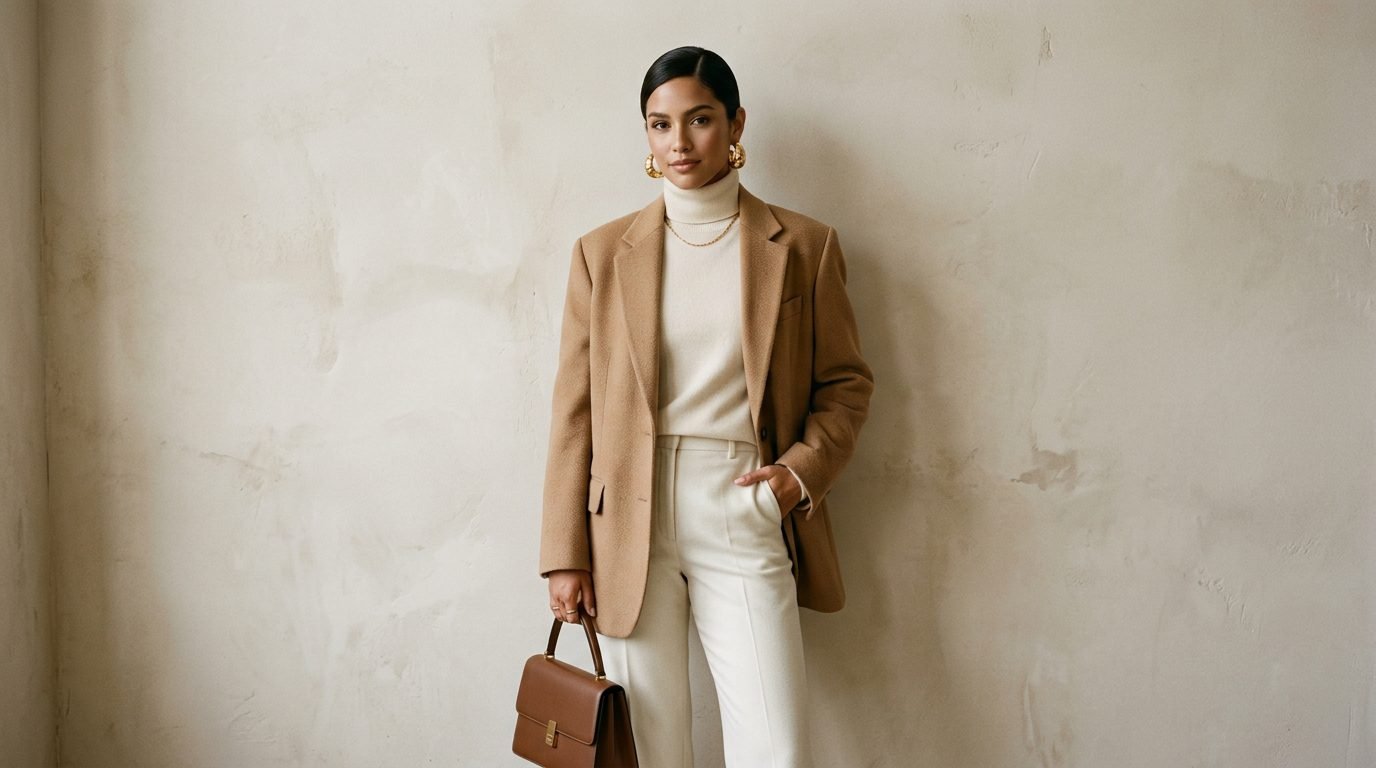

The good news is brutal and beautiful. You can learn how to look expensive on a budget in one afternoon, because every rule below costs either nothing or almost nothing. Twelve rules, each with the reason it works and — because rules exist to be understood, not worshipped — the exact moment to break it.
By the end, a twenty-two-dollar sweater will fool everyone at brunch for you too.
Follow our Pinterest boards for daily style inspiration, and join us on Facebook so you never miss a style guide.
What Actually Makes Clothes Look Expensive

Before the rules, understand the machinery — because once you see the signals, you cannot unsee them, and that is the entire skill.
Expensive-looking style rests on three visible signals: how fabric moves (structured, weighty materials drape differently than thin synthetics), how clothes fit (nothing pulls, gaps, bunches, or swims), and how edited the whole look is (fewer elements, each intentional). Notice what is missing from that list: brand names, current-season pieces, and dollar amounts. The signals are structural. Fashion editors at The Cut have pointed out for years that the quiet-luxury aesthetic took over precisely because it is copyable at any price point.
This is also why the same thirty-dollar dress looks cheap on one person and editorial on another. The dress is not the variable. The rules are.
One honest note before rule one: the rules below pair perfectly with the aesthetic direction in our old money outfits guide — that guide gives you the lookbook, this one gives you the operating system underneath it. Learn both and the effect compounds.
Rule 1: Fit Beats Price, Every Time

Cheap clothes in a perfect fit read as bespoke. Expensive clothes that pull, gap, or bunch read as a costume you borrowed. Every stylist alive says some version of this first, and stylists at Town & Country rank fit above every other signal when asked what separates expensive-looking from cheap-looking.
The budget move: the dry cleaner tailor. Hemming pants, taking in a waist, shortening sleeves — most alterations run ten to twenty-five dollars, and they transform a twenty-dollar garment into something that fits like it was made for you. Spend the alteration money on the pieces you wear weekly and skip it entirely for trends.
When to break it: oversized is a legitimate expensive look — the oversized blazer, the wide-leg trouser — but it only works when the oversizing is intentional. The shoulder seam sits where a shoulder sits. The length is dramatic, not accidental. Intentional volume reads rich; accidental volume reads wrong-size.
Rule 2: Iron Everything. Everything.
The zero-dollar rule with the highest return.
A wrinkled shirt is the single fastest cheap signal a person can send — it says “this was on the floor” louder than any logo ever could. Meanwhile, a crisp press makes budget cotton read like premium cotton, because fabric behavior is most of what your eyes read as “quality.”
The budget move: a basic garment steamer costs less than one trendy top and lasts years. Steam everything before it leaves the closet — knits, trousers, that “dry clean only” label that really just means “do not wring it.”
When to break it: linen. Linen wrinkles by design, and fighting it looks uptight. Press linen sharp before wearing, then let the natural creases happen — that specific relaxed texture is the one wrinkle pattern that reads expensive rather than exhausted.
Rule 3: One Color Family Per Outfit

If you learn only one styling rule from this entire guide, this is the one: tonal dressing — building an outfit in shades of a single color — is the fastest visual shortcut to expensive.
Why it works: head-to-toe color creates one long unbroken line, which reads as intentional and elongating, while multi-color outfits split the eye and read as effort. This is also the mechanic behind the monochrome look that dominates every luxury lookbook, and it is completely free — you already own pieces in the same color families. Our fall capsule wardrobe 2026 guide is built on exactly this logic: five colors, everything pairs, nothing clashes.
The budget move: camel, cream, chocolate, black, and grey are the richest-reading families — and they are the colors thrift stores overflow with.
When to break it: the one saturated accent. A burgundy bag against an all-neutral outfit, a bright scarf on monochrome — one deliberate pop against a tonal base is the highest-style move there is. One accent reads editorial; three accents read sale rack.
Rule 4: Fabric Is the Real Price Tag

The jewelry counter-intuitive that changes everything: expensive looks wear fewer accessories, and each one is bigger than you think.
Three tiny, thin, matchy pieces scatter the eye and read mall-jewelry. One chunky gold hoop, one substantial chain, one bold watch — singular pieces read deliberate and cost the same or less. The entire aesthetic in our old money outfits guide runs on this rule: consistent gold tones, few pieces, all substantial.
The budget move: buy two great gold-tone statement pieces and rotate them forever, instead of ten thin trend pieces. Cost per wear collapses; the look sharpens.
When to break it: the layered look — stacked thin chains, stacked rings — reads expensive when the metals match perfectly and the layering is asymmetric on purpose. Matched layering reads curated; mismatched layering reads junk drawer.
Rule 6: Shoes and Bags Are the Real Budget

Structure is what makes an outfit look “finished” instead of “thrown on” — and it takes exactly one piece.
A blazer over soft pieces, a trench over knits, a structured bag on a flowy dress — one rigid element against relaxed ones creates the tension that eyes read as styled. This is why the blazer formulas in our work outfits for women guide work so relentlessly: the structure is doing the heavy lifting, not the clothes underneath it.
The budget move: one good neutral blazer is the single highest-leverage purchase in budget dressing — it upgrades jeans, dresses, joggers, everything. Our fall fashion trends 2026 guide confirms the relaxed blazer is the silhouette of the season, and thrift stores are the blazer capital of the world.
When to break it: soft-on-soft works — the head-to-toe knit look, the loungewear-adjacent outfit — but it demands the other rules hold the line: perfect tonal color, immaculate fabric, groomed everything. Structure is a crutch; soft looks stand on their own only when everything else is flawless.
Rule 9: Grooming Is Part of the Outfit

Two outfits, same pieces: one looks off, one looks editorial. The difference is usually proportion — the relationship between fitted and voluminous.
The working formula: pair one voluminous piece with one fitted one. Oversized sweater with slim jeans. Wide-leg trousers with a fitted top. Flowy dress with structured boots. The balance in our guides on how to style oversized sweaters and how to style straight leg jeans is all proportion work — and it is free, because it is not about buying anything. It is about what already hangs together in your closet.
The budget move: stand in front of the mirror and ask one question — “is anything on my body oversized and everything else too?” If yes, tuck it, belt it, cuff it, or swap one piece. Thirty seconds of adjustment reads like a stylist was here.
When to break it: intentional volume-on-volume — the oversized blazer over a wide trouser — is a genuine fashion move, but it requires the tuck, the belt, or a heel to anchor it. Anchored volume reads runway; unanchored volume reads laundry day.
Rule 11: The Three-Point Check Before Leaving
This is the rule that converts all the others into a habit — the thirty-second mirror audit stylists run before any appearance.
Check three zones: the shoulders (lint, pet hair, wrinkles — the most-photographed, least-checked zone), the shoes (scuffs, grayed whites, the sock situation), and the silhouette (is one thing bunched, gapped, or pulling?). Fix what the scan finds, and you walk out executing rules one through ten in half a minute.
The budget move: a lint roller lives by the door. A shoe wipe lives in the bag. Combined cost under ten dollars, ongoing return — every single day.
When to break it: the scan is skippable exactly once — when the outfit is new, pressed, and unworn. Everything else in life gets the scan.
Rule 12: Edit One Thing Before You Leave
The final rule is subtraction, and it is the most stylist-sounding move of all: before walking out, remove one accessory.
The earring count, the scarf, the third ring — take one off. Almost every outfit improves, because the cheap signal is never “too few elements,” it is “too many.” Restraint is what the eye reads as confidence, and confidence is what the eye reads as money. The whole philosophy in our capsule wardrobe and aesthetic outfits guides runs on this editing instinct: fewer choices, sharper looks.
When to break it: maximalism is real — but expensive maximalism is coordinated maximalism, where every extra piece shares a metal, a color family, or a vibe. If you cannot articulate what connects the extras, the edit rule applies to you. It applies to almost everyone.
Where the Budget Actually Goes: Spend Versus Save

The Tag You Never Have to Show
Looking expensive on a budget was never a shopping skill. It is an editing skill — twelve rules, mostly free, all learnable, all invisible to everyone except the people who wonder where you shop now.
Run the rules on one outfit tonight. Steam it, tone it, edit it, scan the three points. Then wear it somewhere and wait for the question my friend asked at brunch.
Save this rulebook to our Pinterest boards so it travels with every shopping trip, and build the wardrobe the rules run on with our wardrobe essentials and fall capsule wardrobe 2026 guides — the spend-less system that makes all of this permanent.
New style guides every week. Stay sharp, stay expensive-looking! 💎